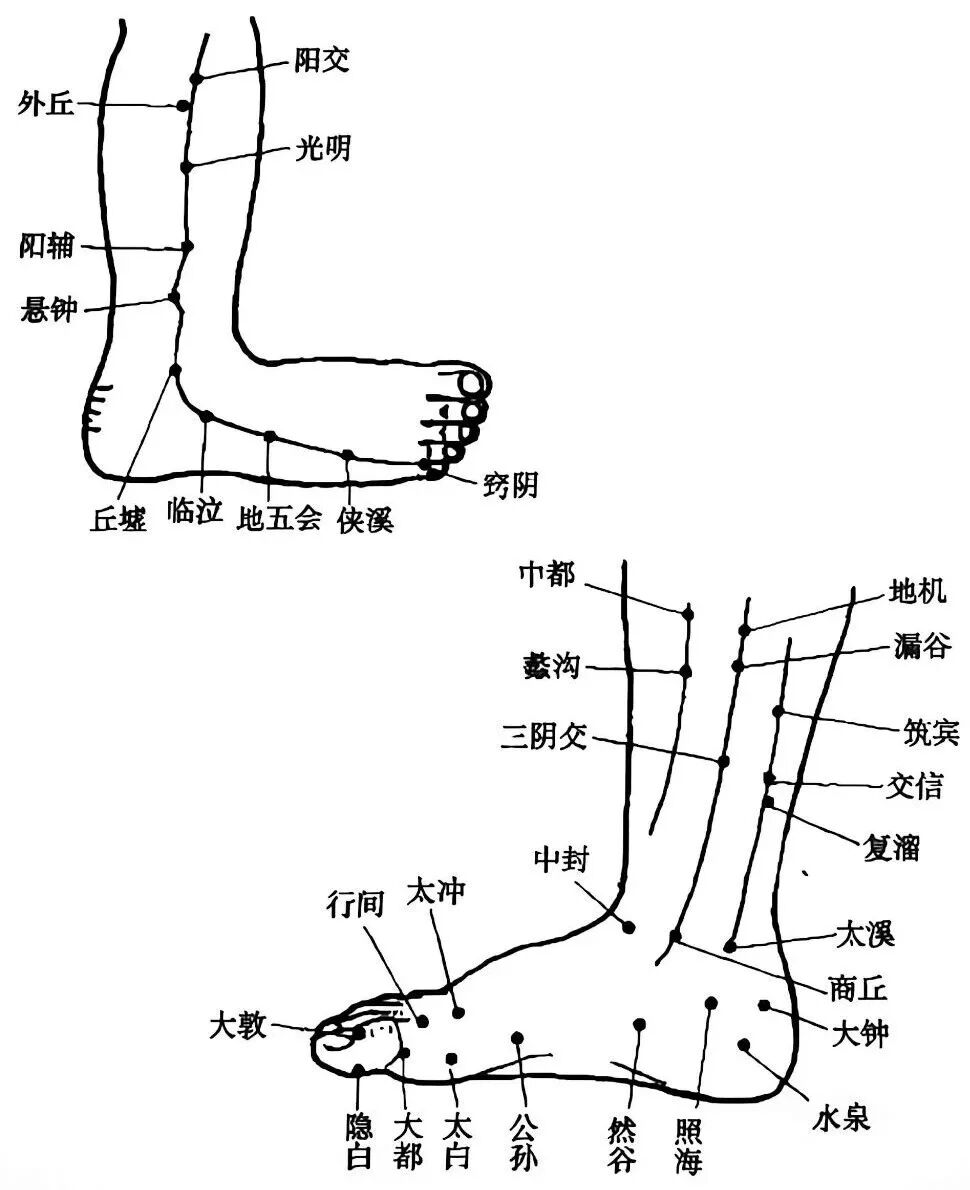
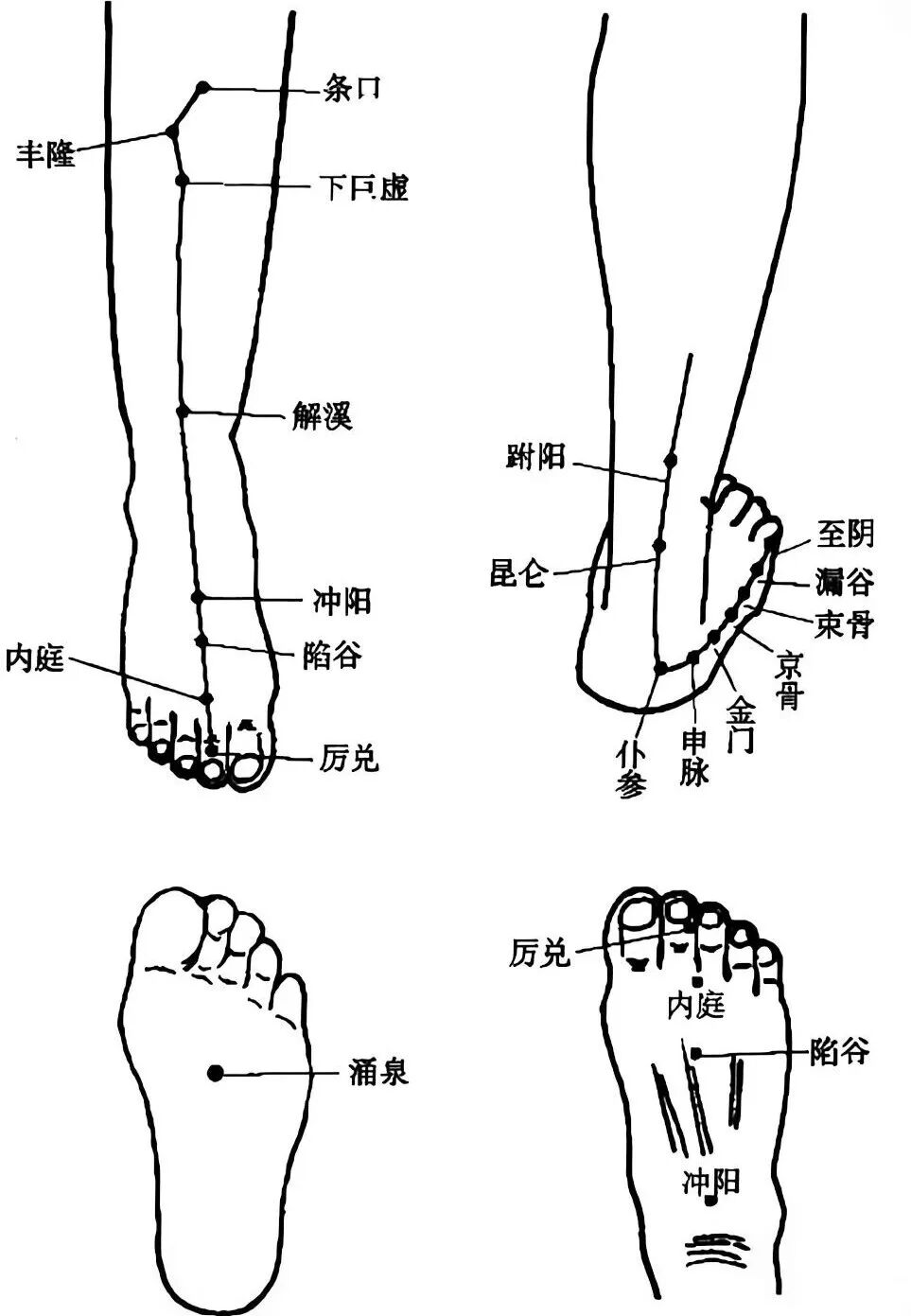
The Kidney Water pharmacy, besides its headquarters in the ears, also extends to the feet. The Liver Wood and Spleen Earth meridians also run to the feet.
Fire has an upward nature, so the Heart Fire and Lung meridians run upward to the hands.
Water has a downward nature, so the three Yin meridians (Kidney, Liver, and Spleen) run downward to the feet.
In TCM, the Kidney is considered the"Root of Pre-heaven," and the Spleen is the "Root of Post-heaven."
Both roots extend to the feet, which is why the feet are a rich and miraculous source of medicine.
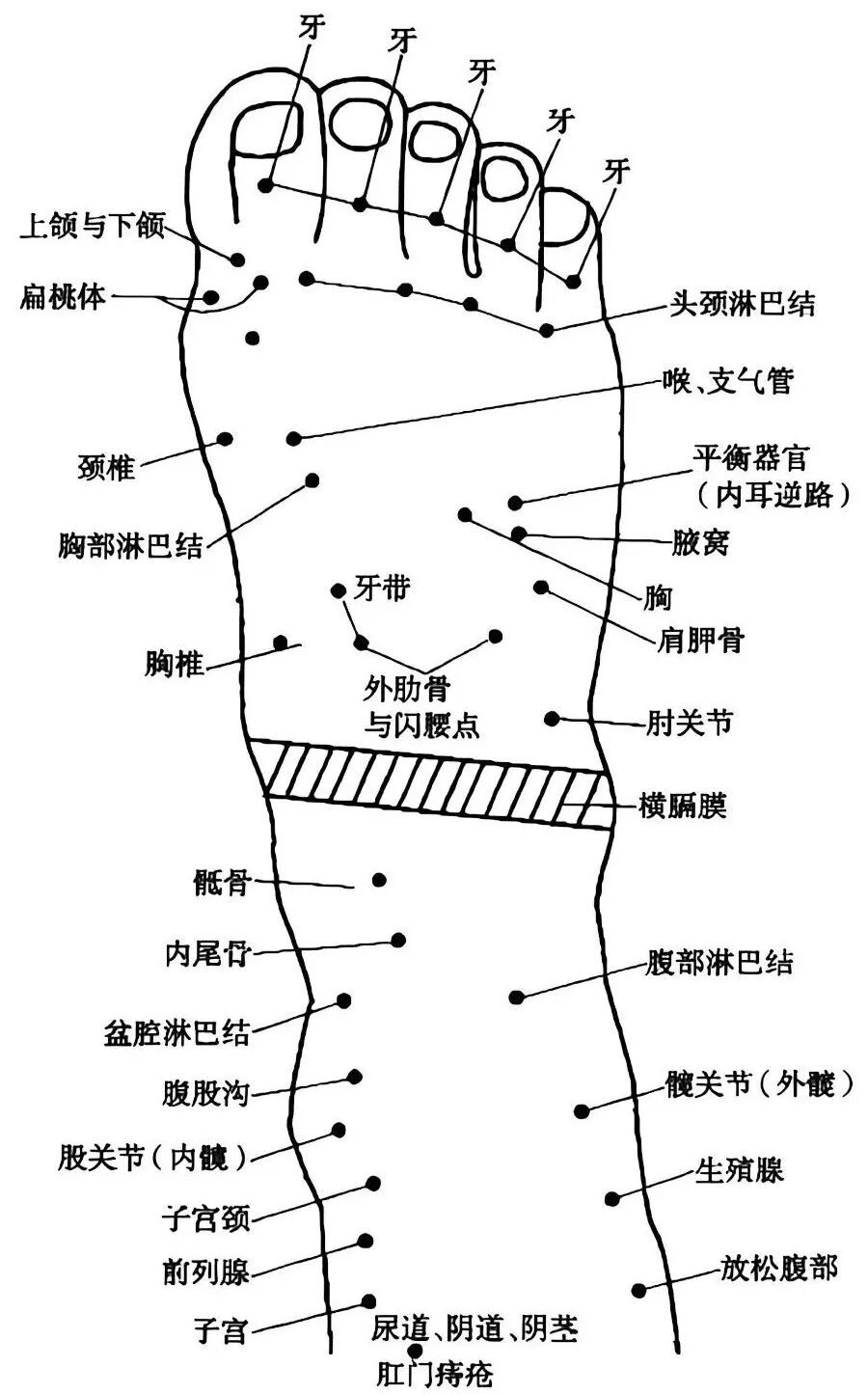
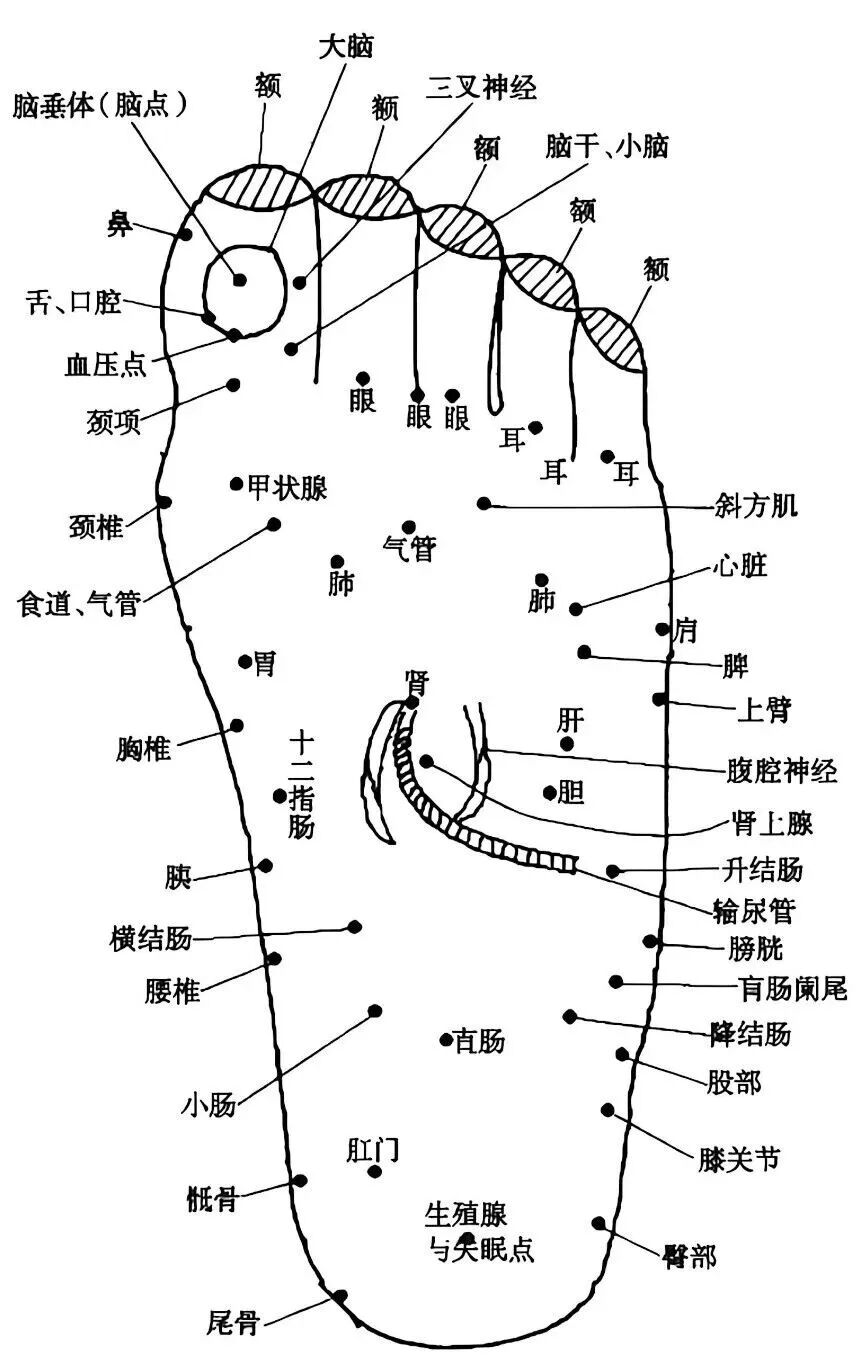
In addition to introducing the functions of foot points, this article also introduces their representative zones to help locate corresponding high-sensitivity points, while combining old and new points as much as possible.
Foot Point Diagram (1)
Foot Point Diagram (2)Foot Point Diagram (4)
(1)Gongsun:Belongs to the Spleen meridian. The point is located in the depression posterior to the base of the first metatarsal bone on the medial side of the big toe. Its representative zones include the forehead, spleen/stomach, intestines, nose, and feet. Its medicinal value includes treating cold malaria, loss of appetite, epilepsy, frequent sighing, alternating chills and fever, sweating, vomiting, swelling of the head and face, restlessness, manic speech, excessive thirst, gallbladder deficiency, upward surging of Qi, cholera, abdominal pain, and abdominal distension. It is primarily used for gastrointestinal diseases and has a cooling nature.
(2)Yinbai:Spleen meridian. The point is located on the medial side of the big toe, about one leek-leaf width from the corner of the nail. Its representative zones include the forehead, spleen/stomach, intestines, nose, feet, and uterus. Its medicinal value includes treating abdominal distension, asthma/fullness preventing sleep, vomiting, inability to eat, chest heat, sudden diarrhea, nosebleeds, sudden collapse (corpse-like syncope), cold feet, prolonged menstrual bleeding, infantile convulsions, and chronic fright. It has a neutral nature and is used for gastrointestinal diseases, nosebleeds, and menstrual disorders. Its hemostatic and anti-diarrheal effects are particularly noteworthy; it can also be used for emergency shock and is worth trying for reviving patients in a vegetative state.
(3)Dadu:Spleen meridian. The point is located in the depression anterior to the base of the first metatarsal bone on the medial side of the big toe, at the junction of the red and white skin. Its representative zones include the forehead, spleen/stomach, waist, ankles, and intestines. Its medicinal value includes treating febrile diseases without sweating, inability to sleep, heavy body and bone pain, cold-induced hand/foot coldness, abdominal fullness with vomiting, restlessness, dizziness, lumbar pain preventing bending or extending, ankle wind, stomach/heart pain, abdominal distension, chest fullness, heart pain, and infantile convulsions. It has a neutral nature and is used for cold/heat diseases and stomach disorders. Notably, it can treat lumbar pain and insomnia.
(4)Taibai:Spleen meridian. The point is located on the medial side of the big toe, in the depression below the head of the first metatarsal bone, anterior to the medial malleolus. Its representative zones include the forehead, spleen/stomach, waist, intestines, knees, thighs, and heart. Its medicinal value includes treating body heat and restlessness, abdominal distension with indigestion, vomiting, dysentery, lumbar pain with difficult defecation, rebellious Qi, cholera, sharp abdominal pain, borborygmus, knee/thigh/leg soreness and cramping, heavy body and bone pain, stomach/heart disease, abdominal distension, chest fullness, and slow heart pulse. It is used for gastrointestinal and lumbar diseases. Notably, it can treat bacillary dysentery, colitis, and intestinal bleeding, and its effects on lowering blood pressure and slowing heart rate are also worth applying.
(5)Shangqiu:Spleen meridian. The point is located in the depression slightly anterior and inferior to the medial malleolus (Zhongfeng is in front, Zhaohai is behind; this point is in the middle). Its representative zones include the forehead, spleen, stomach, intestines, thighs, tongue, and uterus. Its medicinal value includes treating abdominal distension, borborygmus, constipation, spleen deficiency, cold body with frequent sighing, heart sorrow, bone bi-syndrome, rebellious Qi, hemorrhoids, bone ulcers, nightmares, epilepsy, cold/heat with vomiting, inner thigh pain, Qi obstruction, hernia, lower abdominal pain, inability to bend or extend, spleen accumulation/masses, jaundice, stiffness and pain at the root of the tongue, abdominal distension, cold malaria, diarrhea, yellowish complexion, gluttony, indigestion, heavy body with joint pain, weakness and lethargy, female infertility, and infantile chronic convulsions. It has a cooling nature and is used for gastrointestinal, cold/heat, and gynecological diseases. Notably, it can treat female infertility, nightmares, constipation, hemorrhoids, and hepatitis; these five are difficult chronic conditions worth exploring and utilizing.
(6)Sanyinjiao point:Spleen meridian. Place four fingers above the tip of the medial malleolus; the point is in the large bone depression where the four fingers end. Its medicinal value includes treating spleen/stomach weakness, abdominal distension, loss of appetite, spleen pain with heavy body, inability to move limbs, abdominal distension with borborygmus, loose stools with indigestion, abdominal cold, knee pain, urinary difficulty, penile pain, foot sprains, hernia, urinary incontinence, gallbladder deficiency, vomiting after eating, nocturnal emission, cholera, cold hands and feet, "original organ" activation, unbearable lower abdominal pain, infantile convulsions, intercourse during menstruation, emaciation, abdominal masses, persistent bleeding, persistent menstruation, abnormal fetal position, postpartum lochia, excessive blood loss, uterine bleeding/fainting, loss of consciousness, and blocked or depleted meridians. Its representative zones include the forehead, spleen/stomach/intestines, knees, bladder, genitals, uterus, and feet. This is a key point of the Spleen meridian and the only point where the Kidney, Liver, and Spleen meridians converge; it possesses the therapeutic effects of all three meridians, which is truly marvelous. It is used for gastrointestinal diseases, male sexual dysfunction, and various gynecological diseases, with a warming and tonifying nature. It is especially worth noting for warming and tonifying physical weakness; it is a key point for strengthening the body and is highly effective for male nocturnal emission and penile pain, as well as various gynecological conditions in women.
(7)Lougu:Spleen meridian. The point is located six cun above the medial malleolus, in the depression below the tibia. Its representative zones include the forehead, intestines, and knees. It has a warming nature. Its medicinal value includes treating borborygmus, frequent yawning, heart sorrow with rebellious Qi, abdominal distension, cold body, emaciation, and knee bi-syndrome with inability to walk. It is used for intestinal diseases and warming/tonifying; it can also treat lower limb paralysis, which is particularly noteworthy.
(8)Jiexie:Stomach meridian. The point is located at the front of the ankle, where the shoelaces are tied. Its representative zones include the forehead, stomach,
eyes, heart, and eyebrows. It has a cooling nature. Its medicinal value includes treating facial edema, dark complexion, upward surging of Qi, abdominal distension, heavy sensation in the bowels, fear, knee/thigh/leg swelling, cramping, dizziness, headache, epilepsy, restlessness, weeping, cholera, head wind, red face, red eyes, and unbearable pain between the eyebrows. This is a key point of the Stomach meridian. It is used for head/face diseases, gastrointestinal diseases, and mental disorders. It is primarily for head and face conditions; notably, it reduces swelling of the head and face and treats heavy bowel sensations, epilepsy, and mental disorders.
(9)Chongyang:Stomach meridian. Five cun above the dorsum of the foot, two cun away from Xiangu, at the artery between the bones. It can be located at the highest point of the dorsum of the foot. Its representative zones include the forehead, stomach/intestines, face, teeth, and the front of the body. It has a cooling nature. Its medicinal value includes treating wind-stroke with facial paralysis, elbow swelling, tooth decay, chills and fever, large abdominal masses, loss of appetite, cold-induced diseases, shivering with yawning, mania, climbing high and singing, discarding clothes and running, weak feet with loose shoes, and pain in the front of the body. This point is used for facial nerve paralysis and neurological disorders; notably, it treats facial paralysis, tooth decay, and schizophrenia.
(10)Xiangu:Stomach meridian. Located in the depression posterior to the metatarsophalangeal joint between the big toe and the second toe. Its representative zones include the forehead, stomach/intestines, and liver. It has a cooling nature. Its medicinal value includes treating eye and facial edema, water-related diseases with frequent belching, borborygmus, abdominal pain, excessive febrile disease, lack of sweating, and shivering malaria. Notably, it reduces edema and clears fever.