养生保健,有时很简单!
中医经典讲:人体的脏、腑、气、血、筋、脉、骨、髓这八类核心物质的精气,分别汇聚在八个特定的穴位上。掌握了这八个穴位,很多常见的小病小痛、不舒服,就能找到调理的入口。
今天,琦琦老师就把这8个穴位怎么找,怎么按,分享给大家,这样下次遇到身体小不适时,就能找到对应穴位进行自我调治了。
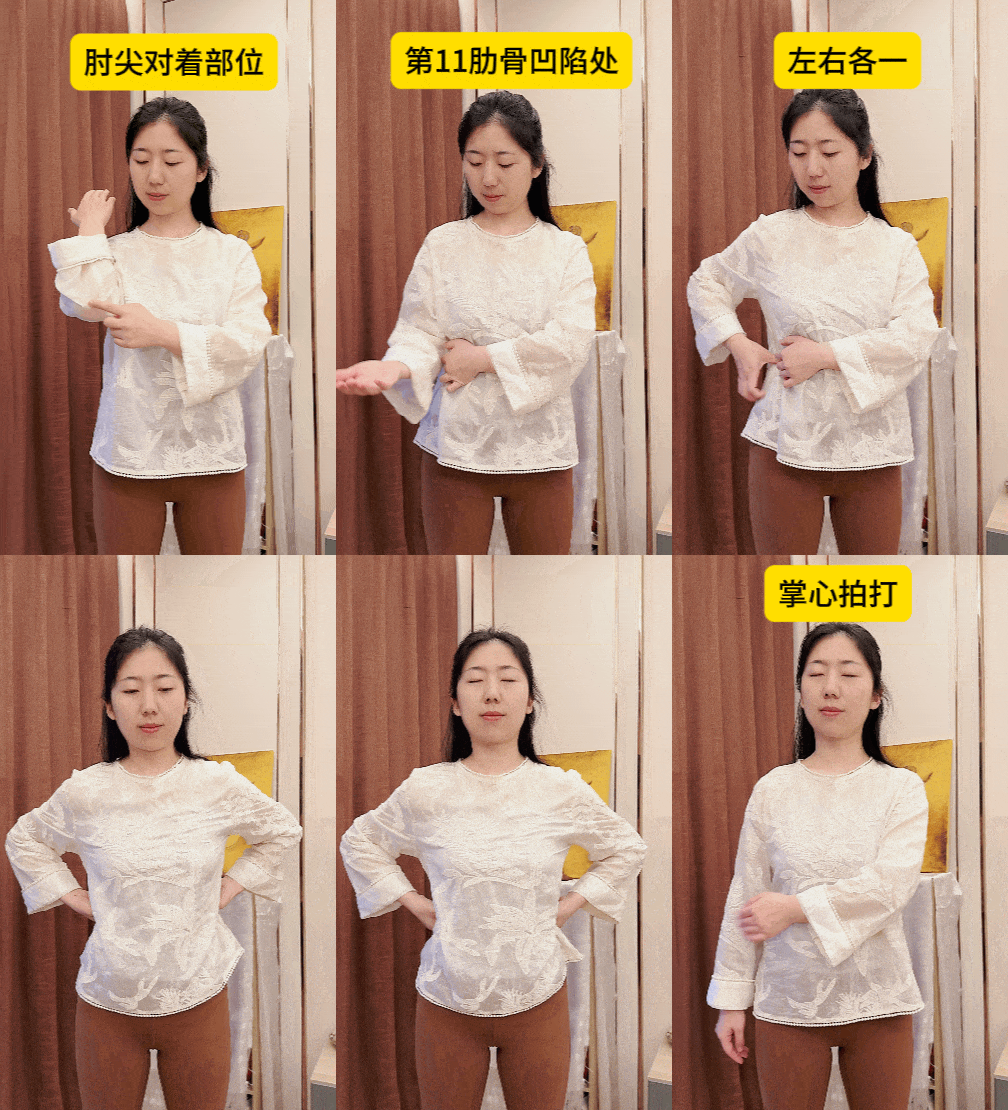
穴位1:脏会——章门穴:调五脏
ul
屈肘90°,让肘尖贴住身体侧面,其正对着的部位就是章门穴,左右各一。
揉按法:用大拇指指腹,轻轻按住穴位,顺时针揉36圈,力度以局部微微酸胀为宜。
拍打法:也可以用空心掌,轻柔拍打该区域36下。
/ul
章门穴在肝经上,刺激它,既能疏肝解郁,又能健脾和胃。
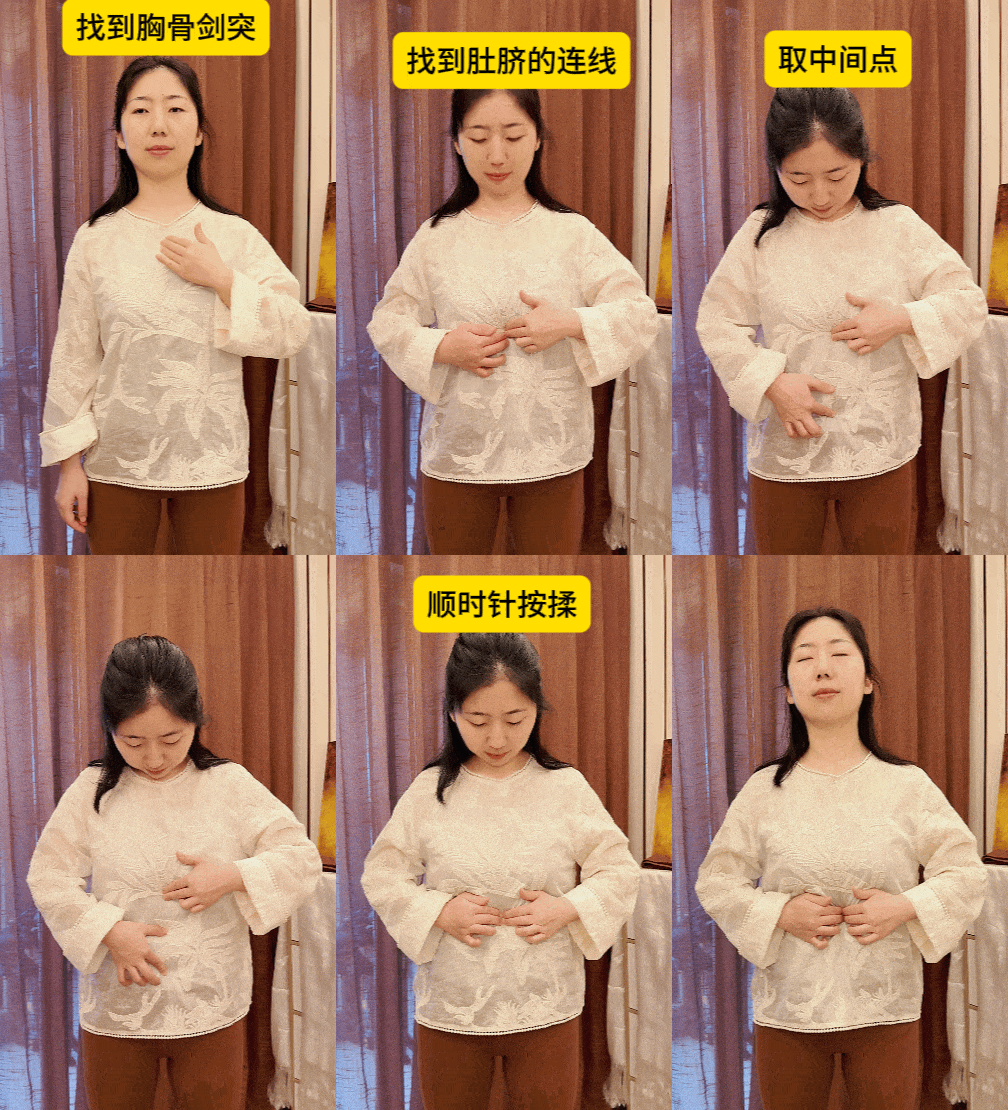
穴位2:腑会——中脘穴:调六腑
ul
站立,找到肚脐和胸骨剑突的连线,取其中点,就是中脘穴。
食指和中指指腹以穴位为中心,顺时针方向轻柔打圈3–5分钟,力度以局部温热舒适为宜。
/ul
刺激中脘穴能健脾和胃、消食导滞、降逆止呕,让整个消化系统运转顺畅。
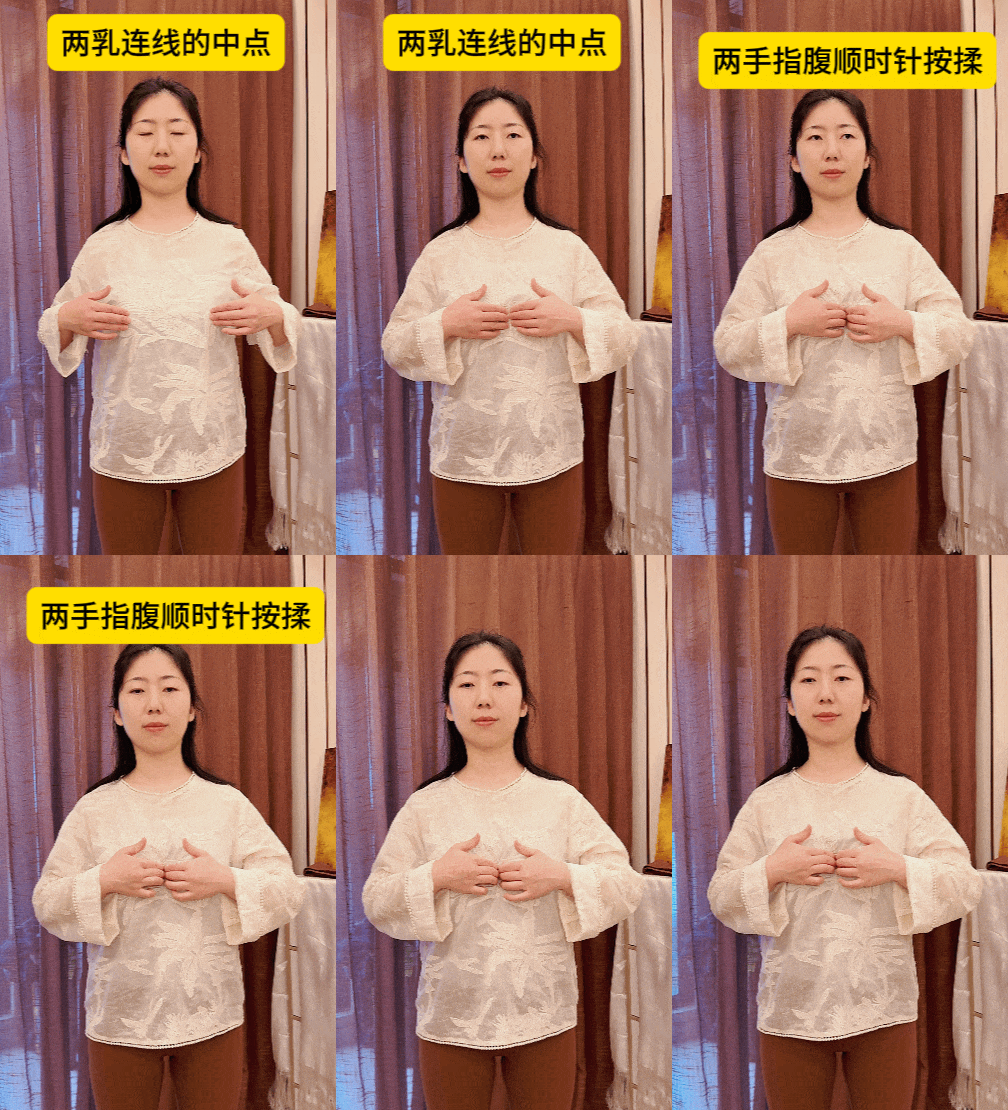
穴位3:气会——膻中穴:通气机
ul
两个乳头连线的中点,就是膻中穴。
用食指和中指指腹,非常轻柔地顺时针按揉36下,直到局部微微发热、舒服为止。
/ul
膻中者,臣使之官,常按揉它把郁结的气释放出来,心松了,喜乐就来了。
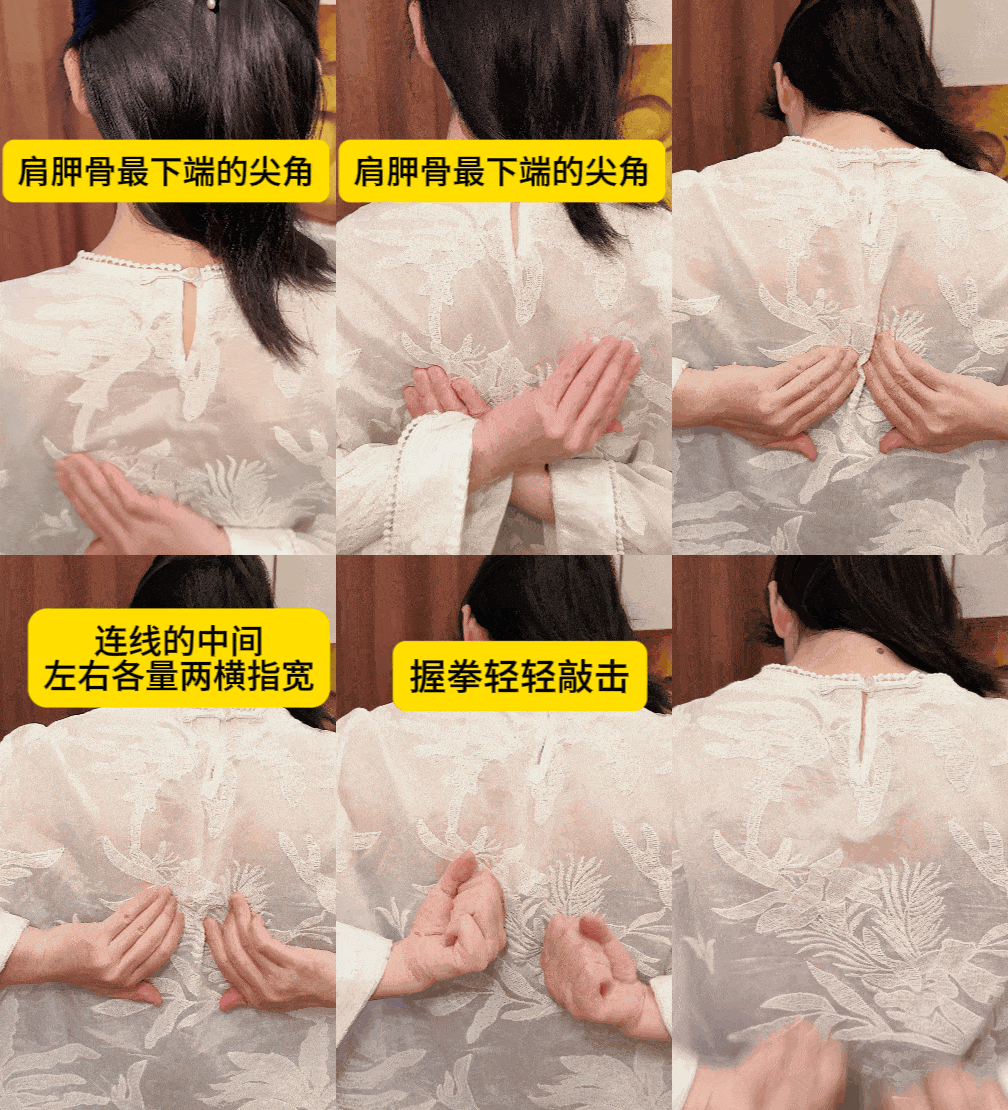
穴位4:血会——膈俞穴:理血脉
ul
反手摸到两侧肩胛骨最下端的尖角,找到两尖角连线的中间第七胸椎。从第七胸椎向左右各量两横指宽,就是膈俞穴。
用双手握拳,轻轻敲击穴位区域,左右各36下。
/ul
膈俞穴既能活血化瘀,也能养血安神,对血瘀、血虚、都有调理作用。
穴位5:筋会——阳陵泉:舒筋脉
ul
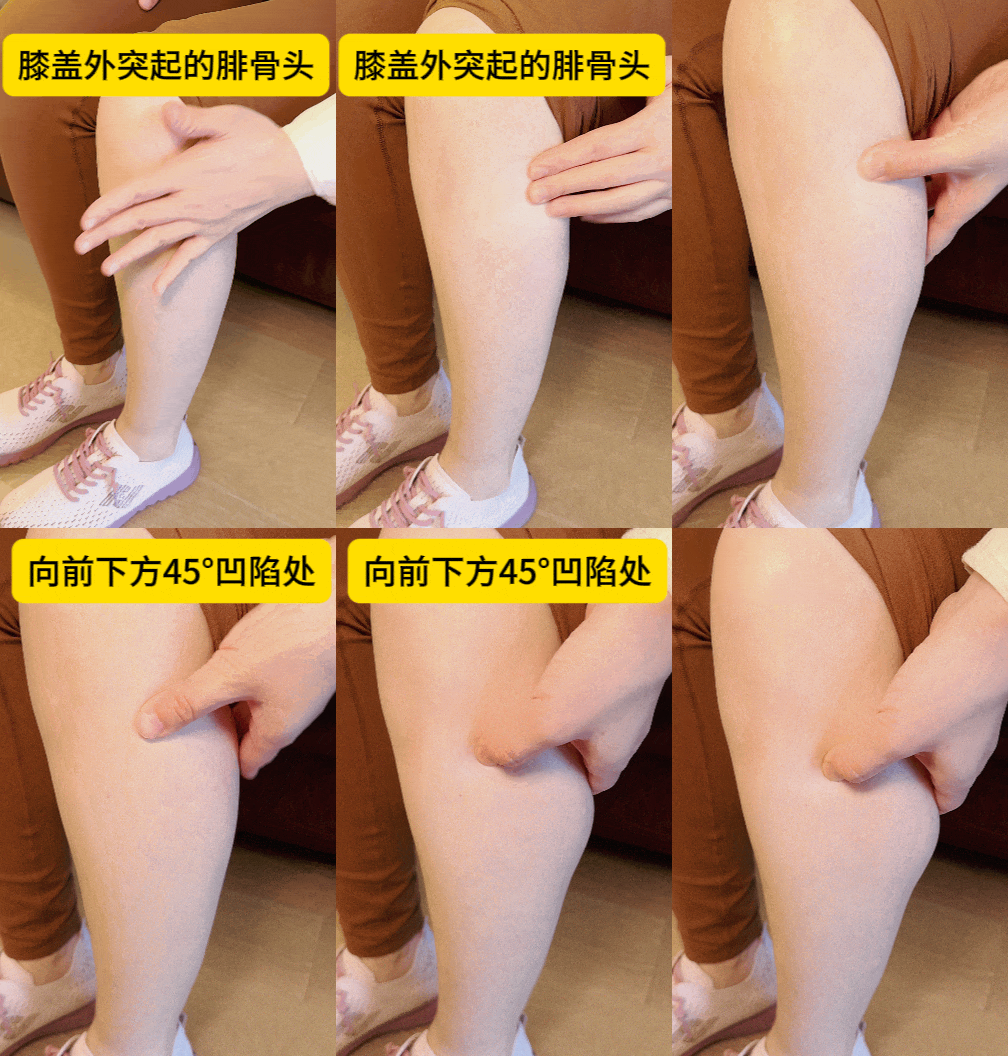
坐姿屈膝,摸到膝盖外侧下方那个明显的腓骨头,向前下方45°凹陷处,就是阳陵泉,左右各一。
用拇指指腹按住穴位,缓缓加力至微微酸胀,保持5秒,松开,重复10–15次。
/ul
阳陵泉能疏肝利胆,又能舒筋活络,对运动后的肌肉紧张、关节不适,都有很好的缓解作用。
穴位6:脉会——太渊穴:活血脉
ul
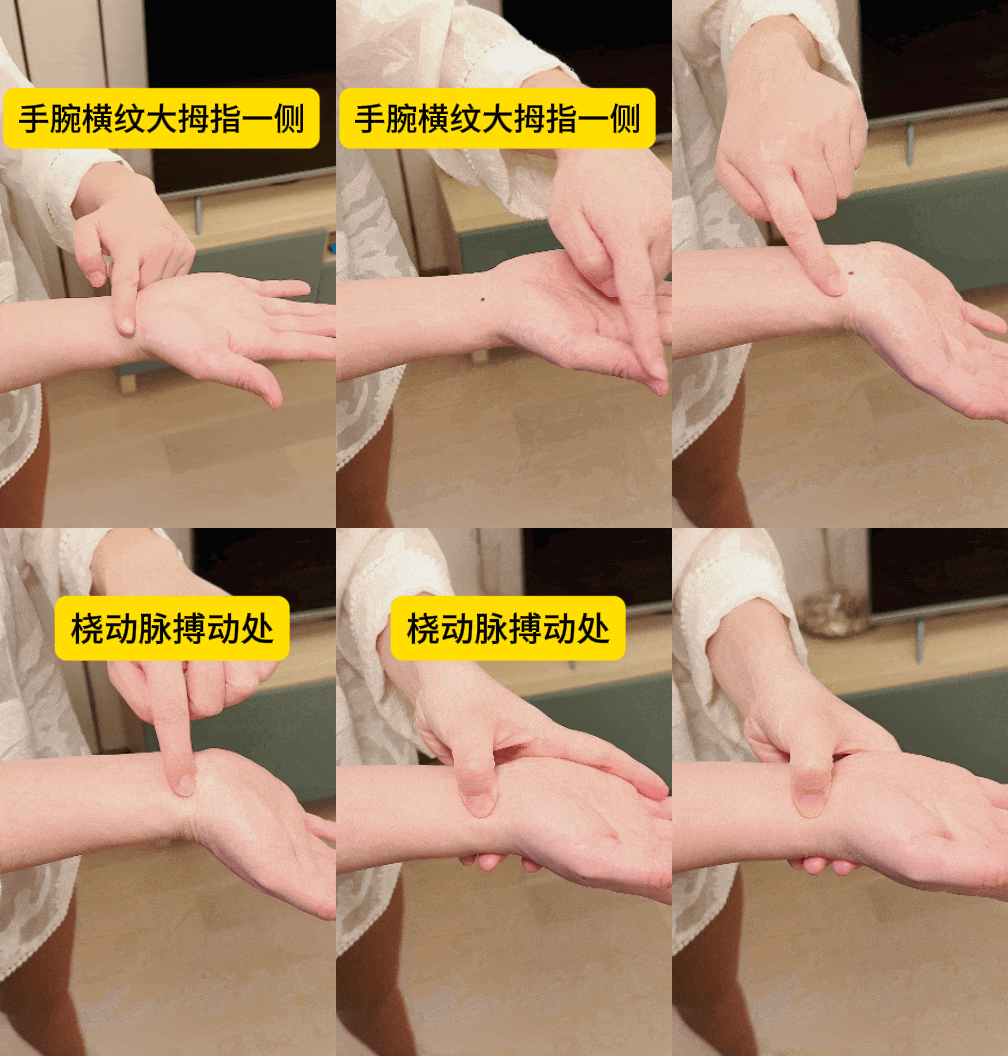
摊开掌心向上,伸直手臂,在手腕横纹靠近拇指一侧,摸到桡动脉搏动处,其旁边的凹陷就是太渊穴。
用另一只手的拇指指腹,轻轻按压或顺时针揉动1–2分钟。
/ul
按揉太渊,能补肺益气、通调血脉,增强身体的防御力。
穴位7:骨会——大杼穴:强骨骼
ul
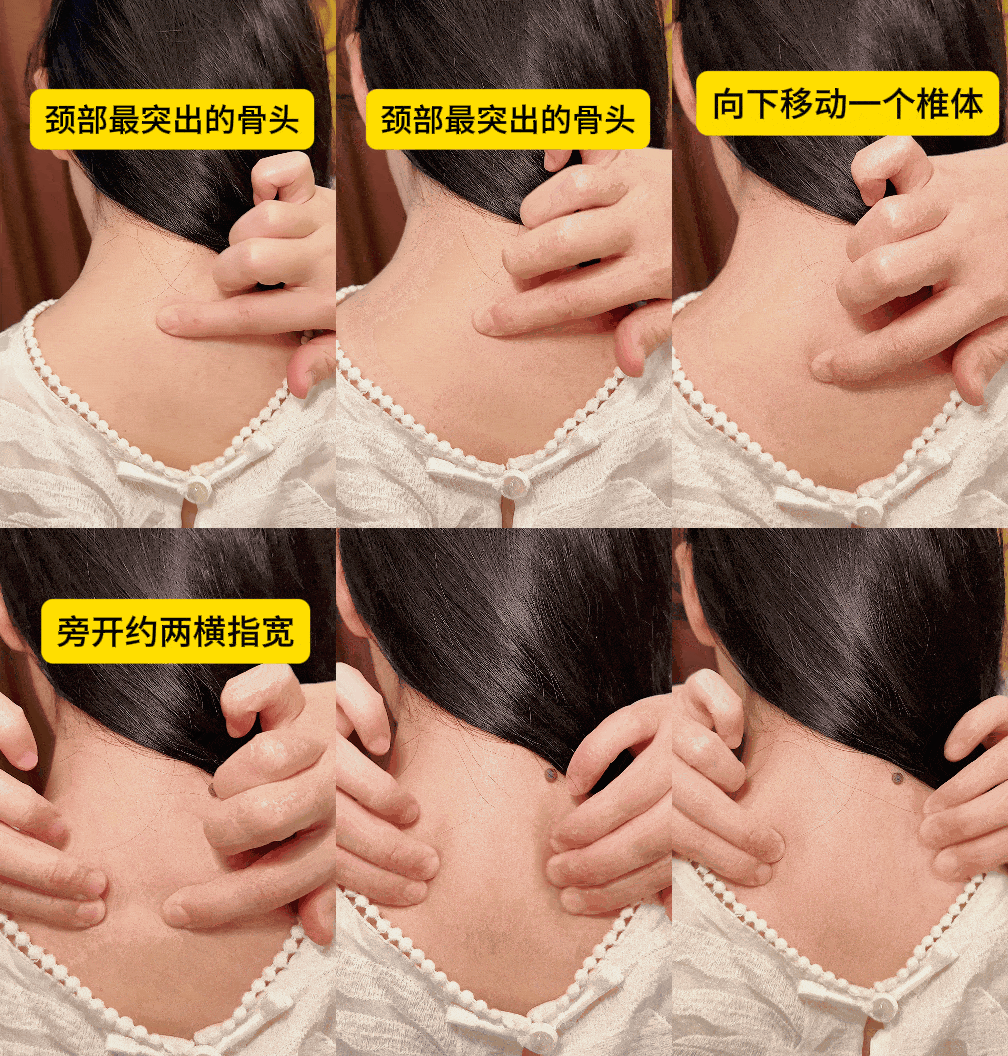
低头,摸到颈部最突出的骨头(第七颈椎),其下方第一个突起就是第一胸椎,从该突起向下旁开约两横指宽,左右各一,即为大杼穴。
用经络拍或空心掌,轻轻敲击穴位区域36下。
/ul
大杼穴既能强筋健骨,又能疏风解表,对颈肩综合征、感冒初起有辅助调理作用。
穴位8:髓会——悬钟穴:养骨髓
ul
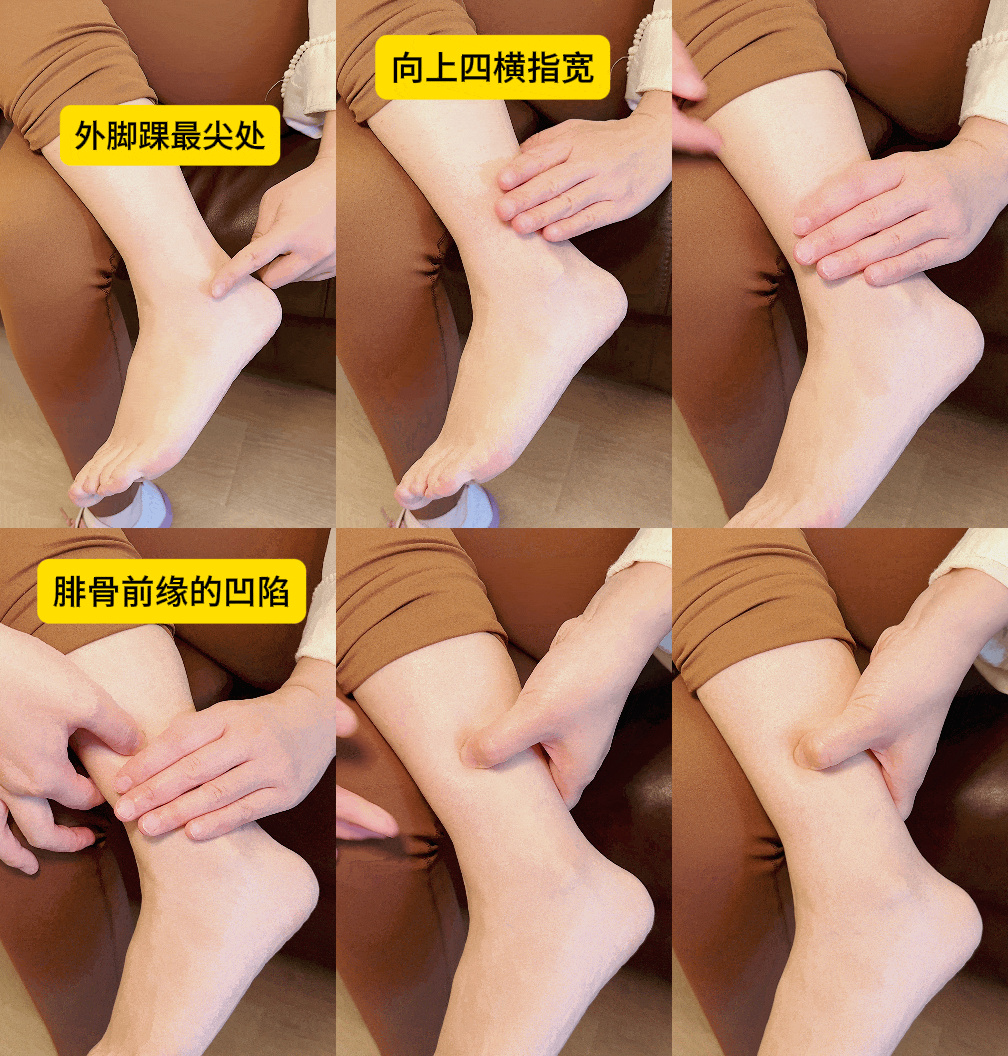
找到外踝尖,向上量四横指宽,在小腿外侧腓骨前缘的凹陷处,就是悬钟穴。左右各一。
用拇指指腹按住穴位,缓缓加力至酸胀感,保持5秒,松开,重复10–15次。
/ul
刺激悬钟,能益髓填精、强健筋骨、聪耳明目,对中老年常见的腰腿无力、记忆力下降很有帮助。
感谢阅读,觉得实用,点个"❤️" 和 "👍"
分享给关心的人!
Health and wellness can sometimes be very simple!
Traditional Chinese Medicine classics state that the vital energy (qi) of the body's eight core substances—Zang organs, Fu organs, Qi, Blood, Tendons, Vessels, Bones, and Marrow—converges at eight specific acupoints. By mastering these eight points, you can find a gateway to address many common minor ailments and discomforts.
Today, Teacher Qiqi will share how to locate and massage these 8 acupoints, so that next time you experience minor physical discomfort, you can find the corresponding point for self-care.
Acupoint 1: Meeting of the Zang Organs — Zhangmen point: Regulates the five Zang organs
ul
Bend your elbow at a 90° angle,keep your elbow tip against the side of your body,and the area it points to is the Zhangmen point; there is one on each side.
Massage method: Use the pad of your thumb to gently press the point, massaging clockwise 36 times, with enough pressure to feel a slight soreness or distension.
Tapping method: You can also use a cupped palm to gently tap the area 36 times.
/ul
The Zhangmen point is on the Liver meridian; stimulating it can soothe the liver, relieve stagnation, and strengthen the spleen and stomach.
Acupoint 2: Meeting of the Fu Organs — Zhongwan point: Regulates the six Fu organs
ul
While standing, find the midpoint of the line connecting your navel and the xiphoid process of your sternum; this is the Zhongwan point.
Using the pads of your index and middle fingers, gently massage in a clockwise circle around the point for 3–5 minutes, using enough pressure to feel a comfortable warmth.
/ul
Stimulating the Zhongwan point can strengthen the spleen and stomach, aid digestion, relieve stagnation, and stop nausea, keeping the entire digestive system running smoothly.
Acupoint 3: Meeting of Qi — Tanzhong point: Regulates the flow of Qi
ul
The midpoint of the line connecting the two nipples is the Tanzhong point.
Using the pads of your index and middle fingers, very gently massage clockwise 36 times until the area feels slightly warm and comfortable.
/ul
The Tanzhong point is known as the "official of the minister"; massaging it often releases pent-up emotions, relaxing the heart and bringing joy.
Acupoint 4: Meeting of Blood — Geshu point: Regulates the blood vessels
ul
Reach behind your back to find the lowest tips of your shoulder blades, then locate the seventh thoracic vertebra in the middle of the line connecting these two tips. Measure two finger-widths to the left and right of the seventh thoracic vertebra to find the Geshu points.
Clench your hands into fists and gently tap the acupoint area, 36 times on each side.
/ul
The Geshu point can invigorate blood, resolve stasis, nourish the blood, and calm the mind, helping to regulate conditions of blood stasis and blood deficiency.
Acupoint 5: Meeting of Tendons — Yanglingquan point: Relaxes the tendons and meridians
ul
Sit with your knees bent and locate the prominent head of the fibula on the outer side of your knee; the depression 45° forward and downward from it is the Yanglingquan point; there is one on each side.
Use the pad of your thumb to press the point, slowly increasing pressure until you feel a slight soreness, hold for 5 seconds, release, and repeat 10–15 times.
/ul
The Yanglingquan point can soothe the liver and gallbladder, and relax the tendons and activate the meridians; it is excellent for relieving muscle tension and joint discomfort after exercise.
Acupoint 6: Meeting of Vessels — Taiyuan point: Invigorates the blood vessels
ul
With your palm facing up and arm extended, locate the radial artery pulse on the wrist crease near the thumb side; the depression next to it is the Taiyuan point.
Use the thumb pad of your other hand to gently press or massage clockwise for 1–2 minutes.
/ul
Massaging the Taiyuan point can tonify the lungs, replenish Qi, regulate the blood vessels, and enhance the body's defensive capabilities.
Acupoint 7: Meeting of Bones — Dazhu point: Strengthens the bones
ul
Lower your head and find the most prominent bone at the base of your neck (the seventh cervical vertebra). The first protrusion below it is the first thoracic vertebra. Measure two finger-widths to the side from this protrusion to find the Dazhu point; there is one on each side.
Use a meridian tapping tool or a cupped palm to gently tap the acupoint area 36 times.
/ul
The Dazhu point can strengthen the tendons and bones, as well as dispel wind and release the exterior, providing auxiliary relief for neck and shoulder syndrome and the onset of a cold.
Acupoint 8: Meeting of Marrow — Xuanzhong point: Nourishes the bone marrow
ul
Find the tip of the external malleolus (outer ankle bone) and measure four finger-widths upward; the depression on the anterior border of the fibula on the outer side of the lower leg is the Xuanzhong point. There is one on each side.
Use the pad of your thumb to press the point, slowly increasing pressure until you feel a soreness, hold for 5 seconds, release, and repeat 10–15 times.
/ul
Stimulating the Xuanzhong point can nourish marrow, replenish essence, strengthen tendons and bones, and improve hearing and vision; it is very helpful for the weakness in the waist and legs and memory decline common in the elderly.
Thanks for reading! If you found this useful, please click "❤️" and "👍".
Share it with those you care about!